Bedding · A practical guide
Choosing Silk Fill for Every Season: A Weight and Construction Guide
Silk-filled bedding is less about dramatic loft than considered comfort: a light, fluid layer that can feel reassuring without becoming cumbersome. The right choice depends on the temperature of your room, how warm you sleep, and the details beneath the surface—fill weight, shell fabric, stitching and care. Here is how to compare summer, all-season and winter options with confidence.
Begin with the room, not the label
“Summer,” “all-season” and “winter” are useful descriptions, but they are not universal measurements. A summer-weight comforter in a heated apartment may feel entirely different from the same layer in a drafty bedroom. Your own sleep temperature matters just as much: someone who tends to feel warm may prefer a lighter silk fill even in a cold climate, while a person who sleeps cold may want more insulation throughout the year.
Before comparing products, consider the conditions you actually sleep in. Is the room consistently cool, or does its temperature change sharply between day and night? Do you sleep beneath several layers, or prefer one comforter and a sheet? Is your mattress close to a radiator, an exterior wall or a sunny window? These details help translate a general warmth category into a more useful decision.
Silk is often chosen for its supple feel and breathable character. Unlike a very lofty comforter, a silk-filled layer commonly lies closer to the body, creating warmth without a pronounced cloud of bulk. That does not make every silk design cool, nor does it guarantee the same experience for every sleeper. Fill amount, construction, shell and room conditions all contribute to the result.
Think of the category names as a starting point rather than a promise. If possible, compare the manufacturer’s stated fill weight or warmth rating, check whether the comforter is intended to be layered, and read the care instructions before deciding. A precise product description is more illuminating than a seasonal name alone.
What “silk fill weight” tells you
Fill weight describes the amount of insulating material used in a comforter, often expressed as a total weight or by area. It is one of the most useful clues when comparing designs, but it should not be read in isolation. Two comforters with different dimensions, shells or constructions may not feel equivalent simply because their stated fill weights appear similar.
Where available, compare the figure for the same bed size and confirm the units. A weight listed per square yard is not directly comparable to a total weight for a queen-size comforter. A tog rating, when supplied, is another way some manufacturers describe thermal performance. It can help frame a comparison, but ratings and terminology may vary, so use them alongside—not instead of—the full specification.
More fill generally suggests greater insulation, but the sensation of warmth is also influenced by how the fibers are arranged and contained. A quilted design, a hand-stretched layer, a cotton shell or a silk shell can each affect the way the comforter drapes and how air moves through the bedding. The best comparison is therefore a complete one: fill material and amount, shell fiber, construction, dimensions and care.
When a listing offers no numerical fill information, look for a clear explanation of intended use and ask the maker for details before relying on a label alone. If you are choosing between two warmth levels, your existing habits can help: note what you use now, whether you wake feeling too hot or too cold, and how much extra bedding you add during the coldest months.
Summer-weight silk: a lighter hand for warm nights
Summer silk bedding is designed for sleepers who want a light covering rather than a heavy, insulating layer. A lower fill amount may be comfortable in a warm room, during a humid season, or for someone who tends to overheat. The attraction is not simply coolness; it is the balance of coverage and ease, with enough substance to feel like bedding while avoiding excessive weight.
For example, a listed summer-weight silk comforter with a cotton sateen shell may specify a 2–4 tog equivalent, a 100% mulberry silk fill and a 300-thread-count shell. Such details give a more concrete sense of the design than the word “summer” alone. Still, treat a rating as a guide: room temperature, sleepwear, mattress materials and personal preference will shape the experience.
Some summer designs are intended to be used alone in warm weather and layered when conditions change. Others may be one component of a set that can be connected to a warmer insert. If versatility matters, examine the fastening system before buying. Buttons, corner ties and side ties are functional details; they can keep layers aligned and reduce shifting, but only if the corresponding pieces are designed to work together.
A light comforter can also be a sensible choice for a heated home in winter. The calendar is less important than the climate beneath your duvet. If your bedroom stays warm and you already use a blanket or duvet cover, a lighter silk fill may suit you better than a heavier winter construction.
All-season silk: a useful middle ground
An all-season comforter aims to provide adaptable warmth across a range of conditions. The phrase does not mean that it will be ideal in every climate or on every night. Rather, it signals a design intended to sit between a very light summer option and a markedly warmer winter weight.
Some all-season designs use a cotton shell around a silk fill. Others pair silk fill with a silk shell. These are not interchangeable constructions: the shell changes the tactile quality, drape and care considerations. Read the full specification carefully, especially when product titles emphasize only the filling.
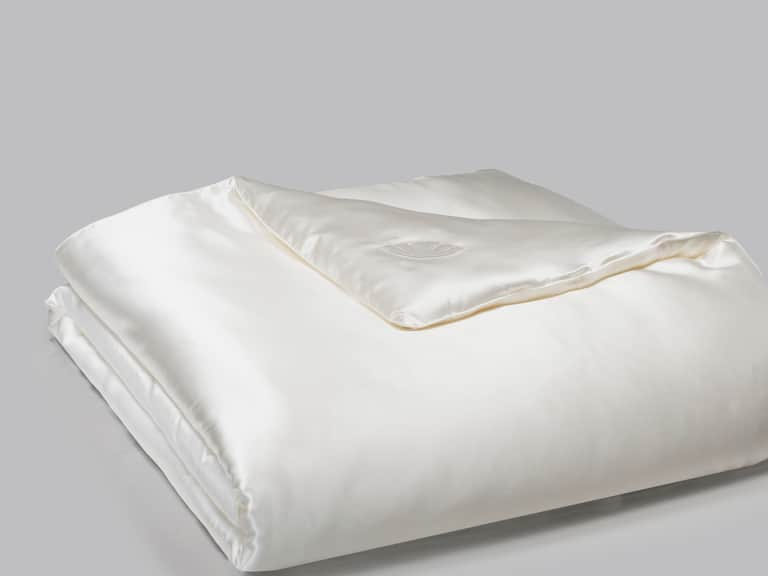
One example is the All Season Silk Filled Comforter with Silk Shell, described with Grade 6A long-strand mulberry silk fill and a 16-momme charmeuse silk shell. It has piping and corner loops, and the care guidance says not to wash or dry clean it; the stated maintenance is to air it periodically or refresh it as directed, with spot cleaning only when needed. The example illustrates a crucial point: a comforter’s shell and care instructions are part of its design, not incidental details.
For some households, a single all-season layer is the simplest solution. For others, a lighter comforter plus a separate blanket offers more control. If the temperature in your home changes widely over the year, flexibility may come from layering rather than choosing one comforter that has to serve every condition by itself.
Winter-weight silk: warmth without assuming bulk
Winter-weight silk comforters are intended to provide more insulation than summer options. They may suit cool bedrooms, people who sleep cold, or anyone who prefers a warmer bed with fewer separate layers. Even so, “winter weight” does not automatically mean a lofty or heavy feel. Silk designs can remain comparatively fluid, and the sensation of warmth depends on the complete construction.
When considering a winter option, look for an explicit fill amount or warmth range, and check whether it is designed to connect to another layer. Some systems use buttons or ties to join compatible comforters. That arrangement can make seasonal adjustment easier: use one layer in milder conditions and add another when the room becomes colder. Before choosing this approach, confirm the pieces are made to fasten together and that their dimensions match.
Layering also has a practical limit. A combination of inserts may provide greater flexibility, but it can be inconvenient to manage if the layers twist, shift or create more warmth than expected. Consider how much adjustment you are likely to make and whether the fastening details seem straightforward enough for everyday use.
People who share a bed but prefer different temperatures may need a more individualized solution. A split-weight design, in which different sections or sides provide different warmth levels, can be worth investigating where available. Check how the division works in practice and whether it remains comfortable when the comforter moves during sleep.
Cotton shell or silk shell?
A cotton shell and a silk shell create different experiences around the same broad idea of silk fill. Cotton sateen often feels smooth and familiar, while retaining the character of a cotton fabric. Thread count may appear prominently in product descriptions, but it is only one specification. Fiber quality, weave, finishing and construction also matter; a higher number by itself is not a guarantee of better comfort or durability.
A silk shell can offer a more continuous silk surface and a fluid, lustrous drape. Momme is commonly used to describe silk fabric weight: it helps indicate the substance of the shell, but should be considered alongside weave, fiber quality and the maker’s care instructions. A 16-momme charmeuse shell, for instance, is a different detail from a cotton shell with a stated thread count. Those numbers measure different things and should not be compared as if they were equivalent.
The choice is personal as much as technical. If you plan to place the comforter inside a duvet cover, the shell may have less direct contact with your skin, though it still affects drape and handling. If you intend to use the comforter without a cover, its shell fabric becomes a more immediate part of the sleep experience. In either case, check for corner loops or ties that secure it inside a cover, and make sure the cover’s dimensions and fastening method are compatible.
A removable duvet cover can protect an insert from everyday soil and reduce how often it needs attention. It does not change the care label, however, and it should never be treated as permission to wash a comforter against the manufacturer’s instructions.
Construction details that make a difference
Silk fill is not always arranged in the same way. Some comforters use layers of long-strand silk, while others describe grades, strand types or particular methods of stretching the fibers. Clear construction information can help you understand how the fill is distributed and what the maker intends the comforter to feel like. If the description is vague, ask how the fill is held in place and whether the product is designed for a cover.
Stitching, quilting, hand-tufting and perimeter construction each serve a practical purpose: they help keep the filling distributed. The precise method may influence the look and feel, but its value is chiefly functional. Inspect the description for details about whether the fill is secured across the surface, whether there are visible quilted compartments, and whether the design recommends a particular type of cover.
Corner loops and ties help anchor an insert inside a duvet cover, reducing the chance that the layers will drift apart. Buttons can connect compatible inserts or secure a cover, depending on the design. Check the product description rather than assuming that a button or loop has a universal purpose. These small details can determine whether making the bed feels effortless or unnecessarily fussy.
Certifications may also appear in a product description. Read what a named certification applies to and verify the scope through the certifier if the detail is important to your decision. A certification can provide information about specified criteria; it should not be interpreted as proof of every performance, health or environmental claim a product might make.
Care is part of the buying decision
Silk-filled bedding does not have one universal cleaning method. Some designs permit gentle laundering; others specify spot cleaning and airing, and some advise against both washing and dry cleaning. The shell, fill, stitching and finish all contribute to the appropriate care. The product label and manufacturer’s instructions take priority over general advice.
Before purchasing, ask yourself how much maintenance you are comfortable with. If you prefer a comforter that can be machine-washed, confirm that the entire item—not merely a removable cover—is suitable for that treatment. Check the recommended temperature, cycle, detergent and drying method. A label that says “silk” does not, by itself, explain how to clean the finished piece.
Using a duvet cover and airing the comforter periodically may help keep it fresh between necessary cleaning, but these are not substitutes for the instructions. Avoid improvising with heat, aggressive detergents or a cleaning method recommended for a different silk product. When in doubt, contact the manufacturer or a professional cleaner and describe the exact construction.
Storage deserves similar care. Follow the maker’s guidance, ensure the comforter is fully dry before putting it away, and avoid compressing it unnecessarily for long periods. Keeping the item in a clean, dry place protects the bedding and makes it easier to bring back into seasonal use.
A considered comparison checklist
When two silk-filled options seem similar, compare them line by line rather than relying on the product name. A small set of questions can clarify the choice:
- What is the intended warmth? Is the comforter described as summer, all-season or winter weight, and is a numerical rating or fill amount provided?
- What does the fill specification say? Look for the fiber type, strand description and amount, if disclosed.
- What is the shell made from? Distinguish cotton sateen from silk and note the relevant construction details.
- How is the filling secured? Check for quilting, stitching, tufting or another stated method of keeping it evenly distributed.
- Can it be layered? Look for corner loops, ties or buttons, and verify compatibility with the intended cover or companion comforter.
- What care is required? Confirm washing, drying, airing and spot-cleaning instructions for the finished comforter.
- Will it fit the bed and cover? Compare finished dimensions, not just the size name, and consider how much overhang you prefer.
- Does the source answer your questions? Clear, specific specifications are more helpful than broad claims about luxury or year-round comfort.
Keep your own sleep experience in the frame. A warmer comforter is not inherently superior, and a lighter one is not automatically more comfortable. The appropriate choice is the one whose warmth, texture and upkeep suit your room and routines.
A simple way to choose
For a consistently warm room or a naturally warm sleeper, begin by comparing summer-weight options and their actual fill specifications. For a bedroom with moderate temperatures and modest seasonal change, an all-season design may provide a useful balance. For a cool room or a sleeper who routinely needs extra layers, investigate winter weights or compatible layering systems.
Then make the decision more precise. Choose between cotton and silk shells according to the feel you want and how you intend to use a duvet cover. Look for secure construction details. Read the care label before you fall for the finish. If the product’s warmth category is the only information available, seek a fuller specification rather than guessing.
The most elegant bedding choice is not necessarily the most elaborate one. It is the one that works quietly: comfortable through the night, appropriate to the room, and manageable to care for. With silk fill, that kind of comfort is found by looking past the seasonal name to the material, weight and craftsmanship that give it meaning.