Bedding · Materials Guide
Inside a Silk-Filled Comforter: How Shell Fabric Changes the Feel
The fill may give a comforter its warmth, but the shell is the first thing your hand encounters. In a silk-filled design, cotton and silk casings bring different textures, care routines, and practical considerations to the bed. Understanding that outer layer makes it easier to choose a comforter that feels right—not only on the first night, but in the rhythm of everyday use.
The layer between you and the filling
A comforter is a collaboration between its filling, its casing, and the construction that holds them together. The filling contributes much of the insulation and weight. The shell contains that filling, protects it from ordinary handling, and creates the fabric surface you feel through a sheet or duvet cover. Even when two comforters use similar silk fill, a change in shell can alter the hand, drape, sound, and maintenance requirements of the finished piece.
That distinction is especially useful when considering silk-filled bedding. “Silk comforter” can describe a comforter filled with silk, one covered in silk, or a design that uses silk for both fill and shell. Those are not interchangeable descriptions. A silk-filled comforter with a cotton shell has a different material arrangement from a silk-filled comforter with a silk shell, even if each contains silk inside.
For a considered comparison, start with the product’s fiber-content label and construction details. Ask what the filling is made of, what the shell is made of, and whether the shell is intended to be washed or protected beneath a removable duvet cover. The answers help separate the sensation of the comforter itself from the fabric that may sit over it.
Cotton shells: familiar, practical, quietly composed
Cotton is a familiar choice for comforter shells because it can provide a soft, breathable-feeling enclosure while remaining comparatively straightforward to understand and maintain. The specific experience depends on the cotton fabric and its weave, finish, and weight. A cotton sateen shell, for example, often has a smoother surface and a subtle sheen, while other cotton constructions may feel crisper or more matte.
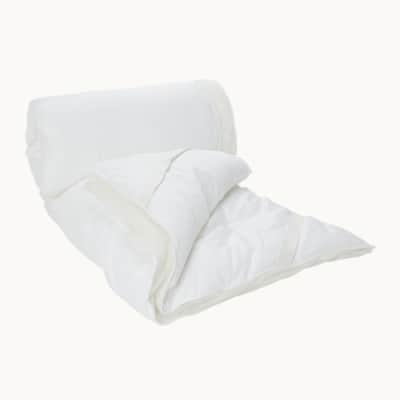
Many silk-filled comforters use cotton sateen as their casing. One example in the category is a year-round silk-filled comforter described with a 100% cotton sateen shell and a 300-thread-count fabric. Another summer-weight option pairs a cotton sateen shell with long-strand mulberry silk filling. These specifications show why it is worth reading beyond the headline material: the comforter may be promoted for its silk fill, while its outer fabric—and therefore much of its direct tactile character—is cotton.
A cotton shell may suit someone who wants the insulating character of silk fill without adding silk fabric to every layer of the bed. It can also be a practical choice for sleepers who prefer a familiar textile against the body or who want to use the comforter beneath a separate cover. Still, “cotton” alone is not a complete care instruction. A comforter’s fill, stitching, finishing, and manufacturer’s guidance all matter. Some cotton-cased silk comforters are designed for spot cleaning or professional care rather than routine home laundering.
Thread count can provide one detail about a woven fabric, but it should not be treated as a standalone measure of quality or comfort. Fiber quality, yarn, weave, finishing, and construction also shape performance. Instead of chasing a single number, look at the complete description and, above all, the care label.
Silk shells: a continuous silk sensation
A silk shell gives the comforter a different kind of presence: smooth, fluid, and often gently lustrous. Its surface may feel more refined than a conventional cotton casing, and the fabric can lend the comforter a graceful drape. If a comforter uses silk for both its filling and its shell, the material story continues from the interior to the outside rather than ending at the casing.
Silk-shell designs are not all constructed alike. One all-season example pairs Grade 6A long-strand mulberry silk fill with a 16-momme charmeuse silk shell. The details also identify piping at the edge and corner loops. Those features speak to both the material and the way the comforter is meant to sit and be secured within a bedding arrangement.
Other silk products specify a silk weight in momme, a unit used to describe the weight of silk fabric. That measurement is useful when provided, but it belongs to the shell fabric; it does not tell you the weight or quantity of the comforter filling. It also does not, by itself, indicate the warmth of the finished comforter. For that, look for seasonal weight, fill details, or a warmth rating where supplied.
Silk is often selected for its smooth hand and the way it moves across a surface. Yet that appeal comes with a care conversation. Delicate silk fabric may require gentle handling, a mild detergent, air drying, or professional cleaning, depending on the item. Do not assume that a silk shell can be washed at home simply because a silk duvet cover can. The cover and the filled comforter are separate textiles with different construction and care needs.
Shell and duvet cover are not the same thing
The terms can blur in conversation, but they describe different layers. The shell is sewn around the comforter filling. A duvet cover is a removable outer layer that encloses the entire comforter. A comforter can have a cotton shell and be placed inside a silk duvet cover; alternatively, a silk-shell comforter can be used under a separate cover or, if its care and design allow, as the visible top layer.
This distinction affects touch and upkeep. When a duvet cover is in place, the sleeper usually feels that cover rather than the comforter shell. The shell still matters: it contains the fill, influences the comforter’s movement, and may affect how smoothly it slides inside the cover. But the removable layer becomes the immediate surface against the sheets or sleeper.
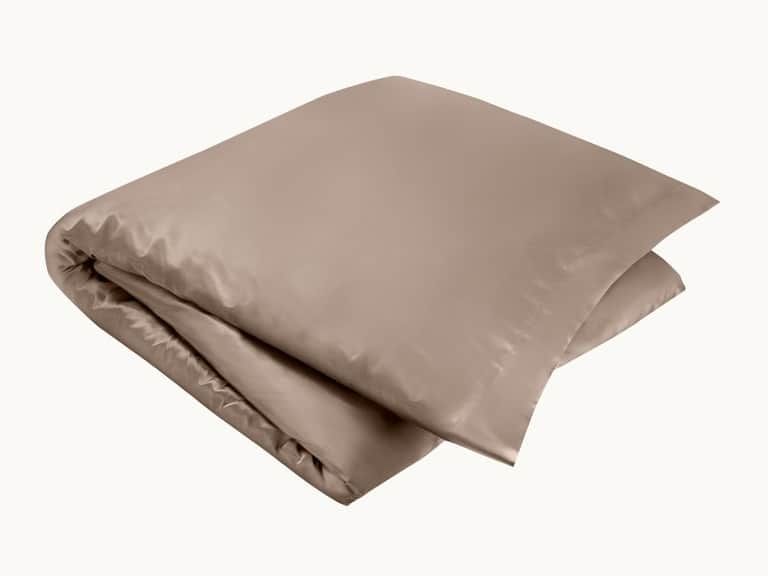
A silk duvet cover can be a way to bring silk’s surface quality into the bedding arrangement without requiring the comforter itself to have a silk casing. For instance, the Mocha Silk Duvet Cover is described as 100% mulberry silk, with a 19-momme fabric, internal corner ties, and a pearl button closure. It is a cover, not a silk-filled comforter shell: the distinction is important when comparing materials, care, and what is actually included.
Corner ties inside a duvet cover can help secure the comforter to the cover, while loops on a comforter can provide the corresponding attachment points. Before combining pieces, check whether the cover and comforter have compatible ties, loops, or other fastening arrangements. A well-matched set is less likely to bunch or shift during the night.
Breathability, warmth, and the feel of a sleep climate
Breathability is a useful word in bedding, but it is not a promise that a person will feel cool in every room or under every layer. The comforter’s fill, shell, duvet cover, sheets, bedroom temperature, humidity, and personal warmth preferences all contribute to the experience. Silk is commonly chosen for lightweight comfort and temperature adaptability, while shell fabric changes the surface feel and can contribute to how the finished comforter behaves as a whole.
When comparing silk-filled comforters, consider the intended season and the amount of insulation—not just the fiber name. Summer-weight designs are made for lighter coverage; winter-weight versions are intended to provide more warmth. An all-season comforter sits between those uses, although “all season” is not a universal warmth standard. Room temperature and individual preference can make the same comforter feel different to different sleepers.
The shell may also affect how a comforter drapes across the body and how it moves beneath a duvet cover. A softer, more fluid fabric can produce a different impression from a crisp or structured casing. These details are personal rather than absolute measures of quality. Someone who enjoys a smooth, flowing hand may prefer a silk shell; someone who prioritizes a familiar cotton surface may choose a cotton-cased option.
Claims about hypoallergenic properties also deserve careful reading. A fiber or fabric may be described as naturally hypoallergenic, but that phrase does not guarantee that a particular sleeper will have no sensitivity. If allergies or skin concerns are part of the decision, check the full material composition and consult a qualified health professional for personal medical advice.
Construction details that earn their keep
Material names describe only part of a comforter. Stitching, quilting, edge finishes, and attachment points influence how the piece holds together and how it functions inside a duvet cover. Look for construction information alongside the fiber content rather than treating it as decorative fine print.
- Quilting or channel construction: Stitching can help organize the filling and keep it distributed across the comforter. The pattern and method vary, so check the maker’s description for how the fill is secured.
- Corner loops or ties: These can connect a comforter to a duvet cover and reduce shifting. Confirm that the fastening points align.
- Buttons and side ties: Some modular or layered designs use these details to join pieces or adjust the arrangement. Read the instructions before attempting to combine weights.
- Edge binding or piping: A finished edge can contribute to the comforter’s shape and appearance, while reinforcing the perimeter.
- Shell weave and finish: Terms such as sateen and charmeuse describe fabric characteristics, but the exact hand depends on the product’s construction and finishing.
Small details can make a substantial difference to the daily routine. A comforter that stays aligned inside its cover is simpler to make up in the morning; a construction that keeps fill evenly distributed can preserve a consistent feel across the bed. Neither feature replaces good care, but both help explain how a comforter is designed to be used.
Care: the label is the authority
Silk bedding is frequently associated with delicate care, but instructions vary widely between a duvet cover, a pillowcase, and a filled comforter. The presence of silk does not create one universal cleaning method. A silk duvet cover may be washable on a delicate cycle at a controlled temperature, while a silk-filled comforter may require airing, spot cleaning, or specialist care. The item’s own care label and manufacturer guidance take precedence over general advice.
Before laundering, identify exactly what needs cleaning. If the removable duvet cover is the issue, remove it and follow its instructions rather than washing the comforter with it. If a stain has reached the comforter, use only a method approved for that specific construction. Excessive moisture, agitation, or heat can damage delicate fabric or affect the filling and stitching.
Using a removable duvet cover can help shield the comforter shell from routine contact and reduce how often the filled piece needs attention. It does not eliminate the need for care, and it does not make every comforter machine washable. Regularly airing bedding according to the manufacturer’s guidance may help refresh it between cleanings. Store a comforter only when it is clean and fully dry, and avoid compressing it for long periods unless the maker specifically permits that method.
For silk shells, be attentive to friction, snagging, and sharp objects as well as washing. A smooth fabric can be beautiful and delicate at once. A gentle routine—careful handling, suitable storage, and prompt attention to spills—supports longevity more reliably than an improvised cleaning shortcut.
A clear comparison before you choose
There is no universally superior shell. The right choice depends on which layer you want to feel, how you plan to dress the bed, and what care routine fits your life. Use the following questions to compare options without allowing a luxury label or a single specification to make the decision for you.
- What is the shell made from? Confirm whether it is cotton, silk, or a blend, and distinguish that from the filling.
- Will you use a duvet cover? If so, the cover may determine the immediate surface feel, while the shell remains important for containment and construction.
- What warmth do you need? Compare the stated seasonal weight or warmth description, rather than assuming shell material determines insulation.
- How is the filling secured? Look for quilting, stitching, or other construction details that explain how the fill is kept in place.
- How does it attach? Check for compatible corner loops and ties if the comforter will go inside a duvet cover.
- What care can you realistically maintain? Follow the exact instructions for the finished comforter, not a general rule for cotton or silk fabric.
- Are the claims specific? Fiber percentages, shell fabric, fill type, and certification details are more useful than broad promises without supporting specifications.
If possible, assess fabric samples or handle comparable materials in person. A description can explain composition and construction, but it cannot fully reproduce the sensation of a fabric against the hand. Keep in mind, too, that a sample of silk shell fabric will not tell you precisely how a quilted, filled comforter drapes once made.
The final impression
In a silk-filled comforter, the fill may be the headline, but the shell gives the design its immediate character. Cotton sateen can offer a familiar, smooth casing around silk fibers; a silk shell brings a more continuous silk surface and a distinctive fluid hand. Neither choice tells the whole story on its own. Seasonal weight, quilting, fastenings, duvet-cover use, and care requirements complete the picture.
The most useful comparison is therefore not simply “cotton versus silk.” It is a closer reading of how each comforter is made and how it will be used: what touches the sleeper, what protects the filling, how the layers connect, and what routine will preserve them. With those details in view, the decision becomes less about a material’s reputation and more about the quiet, practical luxury of a bed that feels considered from the inside out.